

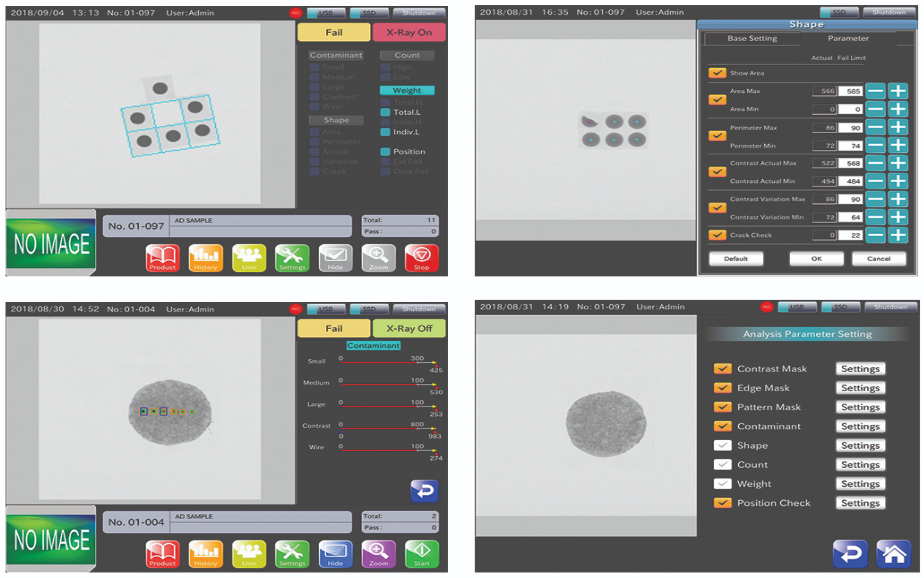
Food x-ray detection plays a vital part in keeping our food safe. But can x-ray inspection systems detect plastic in food packaging?
The answer depends heavily on the type and density of the plastic relative to the food product. Traditional x-ray inspection systems excel at detecting dense contaminants such as metal, glass, or stone, but they often fail to identify low-density plastics and rubber. Plastic contamination in food production is a persistent and serious challenge; common sources include fragments from packaging, wear from machinery, disposable gloves, and food trays. Even small amounts of plastic can pose safety risks, compromise product quality, and damage a brand’s reputation.
By identifying and removing plastic contaminants before products reach consumers, X-ray technology helps food manufacturers reduce the risk of recalls, safeguard brand reputation, and protect consumer safety. However, because detection varies by plastic type and product composition, manufacturers are strongly advised to perform testing to confirm detection capability before purchasing or implementing any inspection solution.
How Food X-Ray Inspection Systems Work
Understanding how x-ray inspection machines work is essential for anyone in food production. These systems help ensure food safety by detecting contaminants that other methods, like metal detectors, can’t always catch, or when the product is in foil packaging. X-ray inspection machines scan the product as it moves along the production line. They can spot a wide variety of foreign objects, including metal, glass, bone, and even some plastics, which might otherwise compromise product quality or safety.
So how do x-ray machines catch contaminants? Simply put, x-rays work by emitting rays through the product and measuring how much of the energy is absorbed. This is known as density-based detection.
Different materials absorb x-rays at different rates depending on their density:
- Denser materials, like metal or bone, absorb more x-rays and appear darker on the x-ray image.
- Less dense materials, like certain plastics or rubber, absorb less and appear lighter.
The system’s software then analyses the image to spot anything that doesn’t match the expected pattern of the particular product. If a foreign object is detected, the machine can automatically raise the alarm and the affected item will be remove from the line.
Does Plastic Show Up on X-Ray?
Simply put: yes, plastics can show up on x‑ray inspection systems, but not in all cases. Some plastics — especially lower‑density types or those oriented poorly within the product — may remain undetected without specialised imaging or enhanced detection technology. Different types of plastic vary in how easily they can be found by x‑ray inspection systems, because detection relies on differences in density and how much the material absorbs X‑rays.
Low‑density plastics, such as polyethylene and polypropylene, are common in packaging and disposable components. These materials absorb X‑rays at levels close to many food products, making them difficult to detect reliably. In most cases, standard X‑ray systems struggle to distinguish these low‑density plastics from the surrounding product unless they are unusually thick or contrasted by other factors.
In contrast, higher‑density plastics — such as PVC, nylon, or Teflon — have a greater ability to absorb x‑rays. These materials create a more noticeable difference on the x‑ray image and are therefore are more likely to be detected. Plastics that contain heavier elements, additives, or fillers also tend to show up more clearly because they affect the way X‑rays interact with the material.
However detection is not determined by plastic type alone. Several other factors influence whether a contaminant will be seen:
- Thickness: Thicker fragments are easier to distinguish than thin fragments.
- Shape: Larger surface area or irregular shapes cast more detectable signatures.
- Product Density: Denser products can “mask” plastics, reducing contrast.
- Orientation: The way a contaminant lies relative to the x‑ray beam affects visibility.
Detecting Plastics: How Small is Too Small?
It’s important to be realistic about what x-ray systems can detect. While high-performance systems can identify metal fragments as small as 0.3 mm, detecting plastic is inherently more challenging.
For typical, unfilled plastics:
- Hard plastics are usually detectable from around 3–5mm in size.
- Soft plastics often need to be 10mm or larger to be reliably identified.
- Thin plastic films are particularly difficult and may go unnoticed regardless of size.
X-Ray vs Metal Detectors for Plastic Detection
Metal detectors and x-ray systems protect food safety in very different ways. Food Metal detectors operate by sensing electrical conductivity, so they are only capable of finding metal fragments. This means they struggle to detect non-metal contaminants such as glass, bone, stone, certain plastics, or rubber.
X-ray inspection, by contrast, identifies differences in density rather than conductivity. This allows x-ray systems to detect a much wider range of contaminants, including metals, glass, bones, and some plastics, providing a broader safety net for food processors. By “seeing” inside the product based on material density, x-ray technology can catch foreign objects that metal detectors would completely miss. Additionally, the presence of foil in the packaging makes metal detectors ineffective, necessitating x-ray inspection instead.
Choosing the Right System
It’s recommended that you select a system that aligns with your product types, line speeds, contamination risks, and quality objectives. Always perform validation testing with your actual products and realistic test pieces before finalising your choice and purchase. Partnering with suppliers that provide free validation testing allows you to verify the system’s effectiveness on your specific products, ensuring reliable detection and protecting both safety and brand reputation. Also consider after-service care, maintenance and spare parts availability.
Best Practices to Reduce Plastic Contamination Risks
- Use Detectable Plastics: Equip production lines with plastics designed to be visible on x-ray systems, helping identify fragments before products leave the facility.
- Preventive Maintenance: Regularly inspect and maintain machinery to reduce wear or breakage that could release plastic into products.
- Staff Training: Ensure all employees understand contamination risks, proper handling procedures, and the role of inspection systems in detecting plastics.
- HACCP & CCP integration: Incorporate plastic contamination controls into hazard analysis and critical control points, making detection and prevention part of the formal food safety plan.
- Routine Testing: Periodically test x-ray and inspection systems with representative plastic samples to confirm detection capability and maintain ongoing reliability.
Conclusion
Food x-ray inspectors are vital to the food industry as they help identify contaminants like metal, glass, bone, and certain plastics, thereby enhancing product safety. While some plastics can be detected, low-density types may go unnoticed. This is why choosing the right machine for your business is instrumental; always consult inspection experts to ensure reliable detection. You can explore our range of food x-ray systems here, or head over to our homepage to check out our other products and services.