

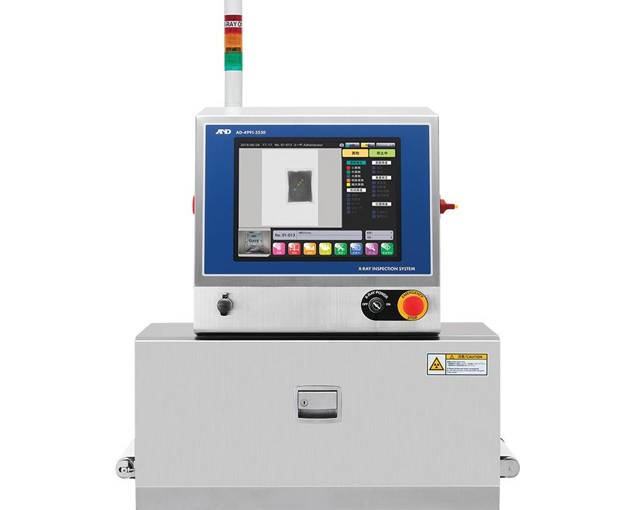
 ProteX X-ray AD-4991-6030
The increased dynamic inspection capabilities provide great confidence and increased quality control standards. Advanced inspections such as shape detection, mass estimation, piece counting and more.
ProteX X-ray AD-4991-4530
The increased dynamic inspection capabilities provide great confidence and increased quality control standards. Advanced inspections such as shape detection, mass estimation, piece counting and more.
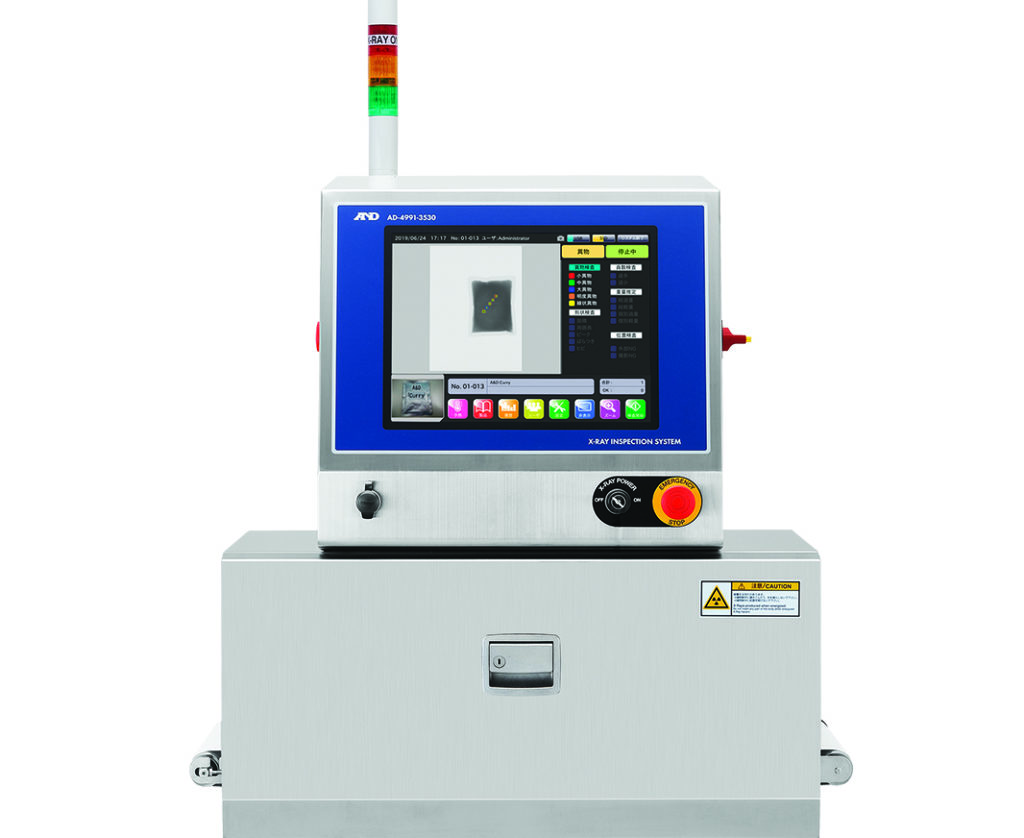 ProteX X-ray AD-4991-3530
Advanced inspections such as shape detection, mass estimation, piece counting and more
Sanitary design complies with hygenic standards and is easily cleaned
ProteX X-ray AD-4991-2515
Advanced inspections such as shape detection, mass estimation, piece counting and more
Sanitary design complies with hygienic standards and is easily cleaned
ProteX X-ray AD-4991-2510
X-ray inspection in food packaging and pharmaceutical applications is growing exponentially because of the versatility it provides.
The increased dynamic inspection capabilities provide great confidence and increased quality control standards, which allow customers to further differentiate their brand.
Why Choose Protex X-Ray Inspection Systems?
A&D’s Protex X-ray inspection systems allow you to:
- Protect Your Customers & Brand: By detecting contaminants and defects early, you prevent both harm and costly recalls.
- Advance Multi-Function Inspection: With the one system, you can detect contaminants, verify product integrity, ensure compliance, and more.
- Integrate Easily with a Compact Footprint: Protex X-Ray is designed to fit existing lines with minimal layout changes.
- Seamless In-Line Inspection: Take advantage of a continuous, high-speed inspection that never slows down your production.
- Reliable Compliance and Reporting: The Protex X-Ray allows for logging and traceability that helps support both regulatory audits and quality checks.
- User-Friendly Operation: With an intuitive interface and advanced algorithms, the Protex X-Ray’s simplified setup makes operator training a breeze.
How Does an X-ray Inspection System Work?
An X-ray inspection system works by passing products through a low-level X-ray beam that creates a density-based grayscale image. This image is then scanned by computer algorithms to detect potential contaminants (such as metal, glass, stone, dense plastic, etc) or missing products and product defects.
Some of the Industries We Support
- Food & Beverage Manufacturing: Many sectors of the food & beverage industries use our inspection range to detect contaminants in their packaged goods, and to help ensure compliance with Australian food safety standards.
- Pharmaceutical Production: Various pharmaceutical and nutraceutical manufacturers rely on our technologies at various vital stages of their processing to ensure every product meets their high standards and to maintain their strict quality control.
- General Manufacturing: Our inspection technology helps general manufacturing by bolstering their existing infrastructure with proactive measurement and safety monitoring systems that improve product quality and consistency.
Key Benefits for Your Business
Integrating a ProteX X-ray system into your facility offers a few core benefits to your quality control process:
- The Prevention of Costly Recalls: With a quality X-ray system in place, you can protect your brand by detecting contaminants early to avoid large-scale product withdrawals and reputational damage.
- Product Quality & Consistency: The ProteX X-ray ensures each item meets specifications by catching defects and deviations on the line.
- Consumer Safety & Trust: By reducing the risk of harm from foreign objects, you will improve your customers’ loyalty to your products.
- Compliance with Australian & International Standards: The ProteX X-ray will help you effortlessly and consistently meet regulatory and industry requirements for food safety and quality assurance.
- Waste & Error Reduction: The ProteX X-ray can identify and remove faulty items quickly and safely.
- A Quicker ROI: The ProteX X-ray can give you a quicker ROI (return on investment) by providing you with advanced contamination detection that offers quality assurance, reduced downtime, and lower operating costs.
FAQ
Can food X-ray inspection systems detect bone, glass, or plastic contaminants?
Yes, the A&D ProteX X-ray series is designed to detect those specific contaminants, though there are some nuances regarding the material density.
Can X-ray inspection be performed through foil packaging and metalised film?
Absolutely. X-ray inspection systems are typically very effective for detecting products through foil packaging and metalised films.
Are X-ray food inspection systems safe for products and operators?
Yes, so long as it’s a modern X-ray food inspection system. Modern-day food X-ray systems are expertly designed to operate effectively while being safe for operators, service technicians, the products, and customers.
Why should I use food X-ray inspection technology (instead of a metal detector)?
X-ray inspection systems are capable of detecting both metallic and non-metallic contaminants (such as the aforementioned bone, glass, plastics, etc). Additionally, if the product has foil or metallic packaging, then metal detectors cannot be used.
Can ProteX systems detect product defects or missing components?
Yes, they can! While catching contaminants like metal or glass is a huge part of what they do, the ProteX X-ray series is also built to handle product integrity—basically making sure the product is complete and looks the way it should.
Where should X-ray inspection systems be installed in a production line?
Generally speaking, an X-ray system is best placed at the Critical Control Points (CCPs), which are identified during hazard analysis; they are therefore most commonly found at the end of the production line. But if in doubt, it’s always better to consult an expert.
What factors should I consider when choosing an X-ray inspection system?
We recommend that you factor in vital considerations such as the product type and the specific contaminants you need to detect, as well as other factors such as packaging material, available line space, required sensitivity, local support, spare parts availability, and, of course, your budget.
Are X-ray inspection systems difficult to integrate into existing production lines?
The ProteX series is built for seamless integration, even in facilities where space is at a premium. Although the final setup depends on your specific line configuration, these systems are generally very adaptable to existing environments. Again, if ever in doubt, don’t be afraid to consult an expert.
What cannot be detected by X-ray inspection systems?
Most X-ray inspection systems have difficulty picking up low-density or low-contrast material, especially if such materials are close to the density of the product. They also cannot pick up non-calcified bone, tiny fragments, allergens, or microbiological contamination. To find out more, get in touch.